Enhance your health with free online physiotherapy exercise lessons and videos about various disease and health condition
Piriformis Muscle Syndrome
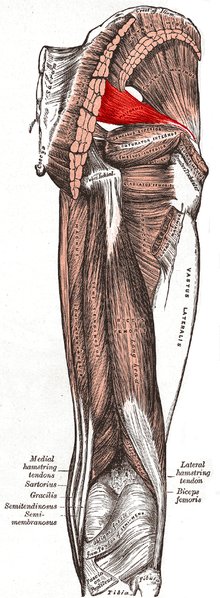
Piriformis Muscle Syndrome is a nerve condition in the hip causing pain and loss of feeling in the back of the thigh often to the bottom of the foot. It involves compression of the sciatic nerve at the hip by the piriformis muscle.
ANATOMY
The piriformis muscle attaches from the front of 2nd and 4th sacral segments,the gluteal surface of ileum and the sacro-tuberous ligament.It then travels through the greater sciatic notch to attach to the upper medial side of the greater trochanter.
Its position is such that sciatic nerve rests directly on the muscle and in 15% of the population the muscle is divided into two with sciatic nerve passing between two bellies.
CAUSES
1-Pressure on the sciatic nerve at the hip by anything that may cause the piriformis muscle to spasm and constrict the nerve and can cause Piriformis Muscle Syndrome.
2-This include strain from a sudden increase in the amount of intensity of activity or overuse of lower extremity.
RISK FACTORS
- 1-Sports involving running, jumping or prolonged walking.
- 2-Being born with nerve traveling through the piriformis muscle.
- 3-Poor physical conditioning(strength and flexibility).
SIGNS AND SYMPTOMS
- 1-Tingling,numbness or burning in the back of the thigh to the knee and occasionally the bottom of the foot.
- 2-Occasionally tenderness in the back.
- 3-Pain and discomfort (burning, dull ache) in the hip or groin, mid buttock area, or back of thigh and sometimes to the knee.
- 4-Heaviness or fatigue of the leg.
- 5-Pain that is worse with sports activities such as running, jumping, long walk, walking uphill and is increased by prolonged sitting.
- 6-Pain that is lessened by lying flat on the back.
- 7-Examination of lumber spine and SI joint is unrevealing.
- 8-Resisted lateral rotation of the affected hip joint gives pain.
- 9-Passive stretch into internal rotation is painful and limited.
SPECIAL TEST
piriformis stretch test in side lying position with the test leg uppermost.
DIAGNOSIS
Diagnosis of Piriformis Muscle Syndrome is by physical examination. Pain with forceful internal rotation of the flexed thigh (Freiberg's manoeuvre), abduction of the affected leg while sitting (Pace's manoeuvre), raising of the knee several centimetres off the table while lying on a table on the side of the unaffected leg (Beatty's manoeuvre), or pressure into the buttocks where the sciatic nerve crosses the piriformis muscle while the patient slowly bends to the floor (Mirkin test) is diagnostic. Imaging is not useful except to rule out other causes of sciatic compression. Differentiation from a lumbar disk disorder is sometimes difficult, and referral to a specialist may be needed.
PHYSIOTHERAPY TREATMENT FOR PIRIFORMIS MUSCLE SYNDROME
1-REST-The patient should temporarily stop running, bicycling, or doing any activity that elicits pain. A patient whose pain is aggravated by sitting should stand up immediately or, if unable to do so, change positions to raise the painful area from the seat.
2-ICE-Patients with Piriformis Muscle Syndrome may also find relief from ice and heat. Ice can be helpful when the pain starts, or immediately after an activity that causes pain. This may be simply an ice pack, or ice massage. Alternating heat and ice is often helpful.
3-PIRIFORMIS STRETCHING-Specific stretching exercises for the posterior hip and piriformis can be beneficial. Treatment usually begins with stretching exercises and massage, and avoidance of contributory activities.
4-STRENGTHENING EXERCISES-strengthening of the core muscles (abs, back, etc.) to reduce strain on the piriformis. Stretching exercises will target the piriformis, but may also include the hamstrings and hip muscles, in order to adequately reduce pain and increase range of motion.
5-PAIN RELIEVING MODALITIES-
ultrasound therapy
LASER
interferential therapy
TENS
shortwave diathermy
6-ORTHOTICS-Custom foot orthotics also help with both treatment and prevention.
7-GAIT TRAINING-Gait correction can reduce the use of the piriformis, allowing the muscle to relax and heal itself.
Read research article about Piriformis Syndrome on PubMed
8-Anti-inflammatory drugs
9-Corticosteroid injections
10-Otherwise surgery is necessary in Piriformis Muscle Syndrome to free the pinched nerve by cutting the muscle or tendon to where the nerve is being pinched.
Return from Piriformis Muscle Syndrome to home page
Recent Articles
|
Author's Pick
Rating: 4.4 Votes: 252 |



 About Prodyut Das (PT, DPT) Physical Therapist at SMC, New York, USA. Former PT Winner Regional Health, South Dakota, Former HOD Physiotherapy & Fitness center @ NIMT Hospital, Greater Noida. Former PT ISIC Hospital. DPT ( Univ of Montana), MPT (neuro), MIAP, cert. manual therapist, Medical Neuroscience (USA). Licensed Physical Therapist in NY and Texas, USA. |
 Connect with me- |
 © Copyright physiotherapy-treatment.com since 2009 |