by Prodyut Das

Physiotherapy Blog

Physiotherapy Exercises

The Physiotherapy Blog is a mini-journal about Physiotherapy. It.....

--Lets you know whenever any new web pages appear on Physiotherapy Treatment, telling you about a new disease or condition.

--Keeps you up to date with other postings or news about Physiotherapy.

--To obtain benefit click on "that orange button" to subscribe to your RSS feed....

Custom Search

Apr 19, 2013

WHO defines & classifies PHYSIOTHERAPY as an independent profession- PT is not Paramedical

World Health Organization (WHO) has classified Physiotherapy as an Independent Practice and out of Paramedical stream PHYSIOTHERAPISTS-(International

Continue reading "WHO defines & classifies PHYSIOTHERAPY as an independent profession- PT is not Paramedical"

Apr 03, 2013

Exercise Band Workouts

Exercise Band Workouts for Neck Stabilizers, Shoulders, Knee Squats, Lateral walk, Hip Abductors etc

Continue reading "Exercise Band Workouts"

Apr 01, 2013

Sign of the Buttock

The Sign of the Buttock is a collection of signs that indicate a serious pathological problem with severe pain in the gluteal region and occasionally the

Continue reading "Sign of the Buttock"

Feb 10, 2013

Quadratus Lumborum Stretch

There are a number of quadratus lumborum stretch that can be used to help prevent low back pain.

Continue reading "Quadratus Lumborum Stretch"

Feb 06, 2013

Hyperekplexia

Neonatal hyperekplexia is a rare autosomal dominant disorder with onset soon after birth, characterized by exaggerated startle response, rigidity and assumption of a flexed fetal position.

Continue reading " Hyperekplexia"

Jan 27, 2013

History of Physical Therapy

Early history of physical therapy : In the year 460 BC, Hippocrates introduced the idea of manual manipulation for pain relief.

Continue reading "History of Physical Therapy"

Jan 24, 2013

Pes Cavus

Pes cavus, is a high arch of the foot that does not flatten with weight bearing. The deformity can be located in the forefoot, midfoot, hindfoot,or a combination of these sites.

Continue reading "Pes Cavus"

Jan 20, 2013

Pes Planus

Flat feet, or pes planus, are a defect of the foot that eliminates the arch. The condition is most often inherited.

Continue reading "Pes Planus"

Jan 06, 2013

Cerebral Palsy Physiotherapy

Cerebral Palsy Physiotherapy aims to normalize the tone, to achieve normal milestones, to maintain muscle length, to correct the posture, Teach activities of daily living, Parent’s counselling

Continue reading "Cerebral Palsy Physiotherapy"

Jan 05, 2013

Zumba Workout

Zumba Workout burn anywhere from 300 to 600 calories depending on the intensity of your class.

Continue reading "Zumba Workout"

Dec 30, 2012

Pediatric Physiotherapy

Within the conventional boundaries of pediatric physiotherapy much is owed to the work of Bobath & Peto. Other systems that offer help and direction to parents include the Portage Teaching Service

Continue reading "Pediatric Physiotherapy"

Dec 24, 2012

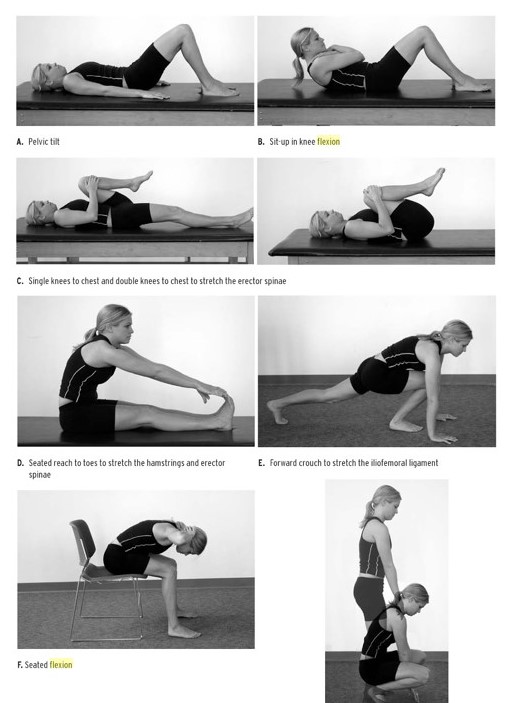
Physiotherapy Exercises

Physiotherapy exercises can improve the ability to use parts of the body that have been affected by disease or injury.

Continue reading "Physiotherapy Exercises"

Dec 22, 2012

Coccydynia

Coccydynia condition simply refers to a painful coccyx. The coccyx bone is located on the end of your sacrum or tailbone and can become irritated and painful in pregnancy.

Continue reading "Coccydynia"

Dec 09, 2012

Indoor Rowing Machines

Indoor rowing machines kills around 700 calories per hour of training. If you take in count that most people intake approximately 2000 calories per day, that's a lot!

Continue reading "Indoor Rowing Machines"

Dec 07, 2012

Heat Syncope

Heat syncope a fainting or near-fainting condition that occurs among people who have been standing in one position for a period of time, usually in the sun

Continue reading "Heat Syncope"

Dec 03, 2012

Incentive Spirometry

Use of incentive spirometry in children and in some adolescents to provide motivation to increase lung volume following surgery

Continue reading "Incentive Spirometry"

Dec 02, 2012

Rotator Cuff Physical Therapy

Rotator Cuff Physical Therapy protocol has been developed for the patient following a rotator cuff surgical procedure.

Continue reading " Rotator Cuff Physical Therapy"

Dec 01, 2012

Legg Calve Perthes disease

Legg Calve Perthes disease, is characterized by necrosis of the ossific nucleus of the femoral head secondary to occlusion of the arterial or venous blood supply.

Continue reading "Legg Calve Perthes disease"

Nov 29, 2012

Trendelenburg Gait

A positive Trendelenburg gait is generally indicative of hip abductor weakness.Hallmarks of the Trendelenburg gait pattern are depression of the swing phase pelvis

Continue reading "Trendelenburg Gait"

Nov 24, 2012

Isometric Contraction

Isometric Exercise (Static Exercise) Isometric contraction is a static form of exercise in which a muscle contracts and produces force without an appreciable

Continue reading "Isometric Contraction"

Oct 21, 2012

Mallet Finger Treatment

For mallet finger treatment splinting is the best choice of management. Open treatment can result in frequent complications.

Continue reading "Mallet Finger Treatment"

Sep 27, 2012

Glossopharyngeal Breathing

Glossopharyngeal breathing (GPB) is a technique useful in patients with a reduced vital capacity owing to respiratory muscle paralysis, for example following poliomyelitis or in tetraplegics.

Continue reading "Glossopharyngeal Breathing"

Sep 27, 2012

Valsalva Maneuver

Valsalva maneuver - A forceful exhalation against a closed airway that increases pressure in the thoracic cavity and results in decreased venous return.

Continue reading " Valsalva Maneuver"

Sep 23, 2012

Spinal Shock

Spinal Shock is acute transient stage of spinal cord lesion resulting in flaccid paralysis below the level of injury, with muscular hypotonia and loss of deep tendon and superficial reflexes.

Continue reading "Spinal Shock"

Sep 21, 2012

Conus Medullaris

The conus medullaris, which is the terminal segment of the adult spinal cord, lies at the inferior aspect of the L1 vertebrae.

Continue reading "Conus Medullaris"

Sep 16, 2012

femoral anteversion

A pathological increase in angle of torsion is called femoral anteversion, and a pathological decrease in the angle or reversal of torsion is known as

Continue reading " femoral anteversion"

Sep 16, 2012

Coxa Valga

A pathological increase in the medial angulation between the neck and the shaft is called coxa valga, and a pathological decrease is called coxa vara.

Continue reading "Coxa Valga"

Sep 16, 2012

Coxa Vara

If the angle of inclination of the femoral neck to the shaft in the frontal plane exceeds 130 degrees then it is known as coxa valga; an angle less than

Continue reading "Coxa Vara"

Sep 01, 2012

Q angle

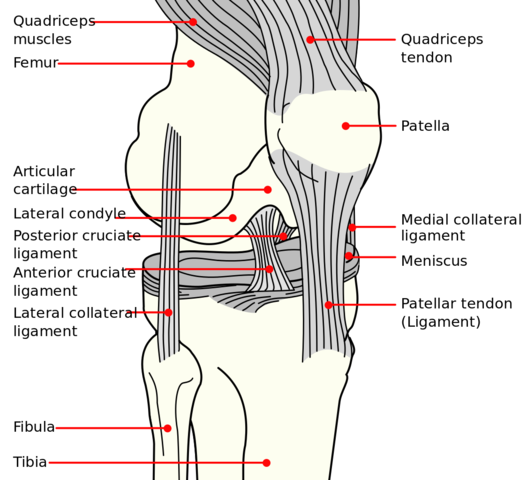
The Q angle is described as the angle between the vector of the quadriceps tendon and the vector of the patellar tendon.

Continue reading " Q angle"

Aug 29, 2012

Patellar Tendinitis

Patellar tendinitis or ‘jumpers knee’ is a condition that results from an inflammation of the patellar tendon.

Continue reading "Patellar Tendinitis"

Aug 29, 2012

Osgood Schlatter Disease

Osgood Schlatter Disease is most commonly characterized by the big tibial tubercle and pain on activities like kneeling or repeated jumping.

Continue reading "Osgood Schlatter Disease"

Aug 28, 2012

Sternoclavicular Joint

The sternoclavicular joint is a diarthrodial joint composed of the large medial end of the clavicle, the sternum, and the first rib

Continue reading "Sternoclavicular Joint"

Aug 26, 2012

Boutonniere Deformity

Classic boutonniere deformity of proximal interphalangeal (PIP) joint flexion and distal interphalangeal (DIP) joint hyperextension.

Continue reading "Boutonniere Deformity"

Aug 25, 2012

Sinus Tarsi Syndrome

Sinus tarsi syndrome is described as persistent pain at the sinus tarsi that follows a lateral ankle sprain.

Continue reading "Sinus Tarsi Syndrome"

Aug 24, 2012

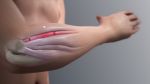
Bicep Tendon Tear

Distal bicep tendon tear occurs almost exclusively in males and generally in the age range of 40 to 60 years.

Continue reading "Bicep Tendon Tear"

Aug 21, 2012

Medicine Ball Workouts

Best medicine ball workouts for core, upper body and lower body with exercise videos

Continue reading "Medicine Ball Workouts"

Aug 15, 2012

Leg Cramps at Night

leg cramps at night are defined as spasmodic, painful, involuntary, contraction of skeletal muscle that occur during the night when a person is sleeping

Continue reading "Leg Cramps at Night"

Aug 02, 2012

Autonomic Dysreflexia

Autonomic dysreflexia is a vascular reflex which occurs in response to a stimulus from the bladder, bowel or other internal organ below the level of the lesion in a patient with a high lesion

Continue reading "Autonomic Dysreflexia"

Aug 01, 2012

Old Athletes

Old athletes are generally less flexible and have smaller muscle masses, lower aerobic capacities, and less well-tuned thermoregulatory mechanisms than they did at a younger age.

Continue reading "Old Athletes"

Jul 30, 2012

Burn Rehabilitation

Components of an interdisciplinary burn rehabilitation program are wound care, range of motion, pressure garments, splinting and casting, conditioning and strengthening, psychological assessment

Continue reading "Burn Rehabilitation"

596989_Precor- Home Sweet Health Club 468 x 60
SITE MAP
You liked it? then do share


Testimonials
"Physiotherapy Treatment Approach continues to exceed my expectations in terms of the quality that Prodyut continues to put out there. This is the leading website in the world in regards to progressing our understanding of human movement and how we apply it to the rehabilitation and strength and conditioning setting. Keep up the good work Prodyut!"
- Dave O'Sullivan, Physical Therapist
"Continue your great work-love your site! It has sent me in new directions as a PT -love looking at different points of view and see how I can incorporate it into my practice!"
- Kenny Physical Therapist, UK
"Prodyut Das has put together a fantastic resource for any professional involved in the rehabilitation or performance training of athletes. physiotherapy-treatment.com has become my go-to resource for cutting edge information on elite athletic development and injury prevention."
- Emmannual Augustine, Physiotherapist, ISIC, New Delhi, India.
For Physiotherapy Treatment in Delhi/ Gurgaon Consult Dr Prodyut Das(PT)
HOD Physiotherapy
ANH Multispeciality Hospital
Former Physio ISIC Hospital
(9910883909)

Featured Pages by Guest Writers

Spasticity

Tone Assessment

Neuropathy

Neurological Signs

Sports Injuries

Femoral Anteversion

Coxa Valga

Coxa Vara

IT band Stretch

Isometric exs

Breast Cancer PT

Sign Of Buttock

Cervical Vertigo

Treatment for COPD

Neck Pain Causes

Elbow Pain

Bee Therapy MS

Shoulder & neck pain

Rectus Sheath Hematoma