Enhance your health with free online physiotherapy exercise lessons and videos about various disease and health condition
Physical Therapy For Women
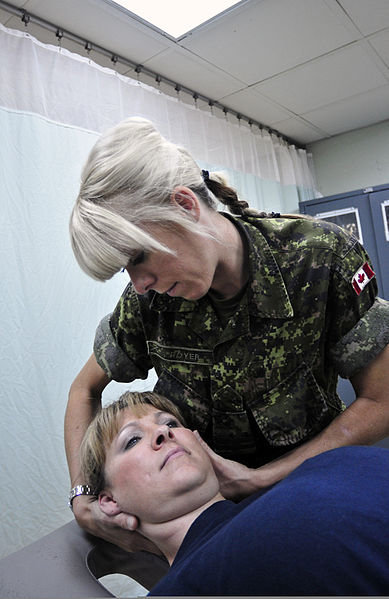
Physical Therapy for women is a conservative, effective treatment option for a number of specialized women health problems. To begin a physical therapy program, the therapist will first do an evaluation. This includes documenting your history, current and past. The therapist will also evaluate the following, as appropriate for your needs.
- Posture.
- Strength.
- Range of motion and flexibitily.
- Balance.
- Movement patterns / coordination.
- Function with daily activities (like how you might pick up something off the floor, move from sit to stand, etc.)
- Scar mobility.
- Areas of muscle and tissue tenderness.
- Other special tests.
Physical Therapy For Women deals with problems related to women's health issues, this might include helping women maximize their ability to carry out their daily activities or recover from:
- Pelvic floor dysfunction such as incontinence or prolapse.
- GYN surgery.
- Pregnancy related complications.
- Pain issues: painful intercourse, painful menstrual periods, vaginal, rectal or other types of pelvic pain.
- Postnatal Exercises.
- Pelvic Inflammatory Disease.
- Other predominant women's health issues such as osteoporosis and fibromyalgia .
SOME RELATED TOPICS DISCUSSED HERE:-
Treatment options include:
Find a Physical Therapist for Women's Health using APTA's find a PT Tool
- Therapeutic exercise to improve strength, mobility, and endurance.
- Muscle re-education to help improve patterns of movement and body awareness such as postural alignment.
- Self care strategies to provide education and understanding about your health problems and what you can do to help yourself for the present and the future.
- Therapeutic activities to problem solve difficult daily activities.
- Modalities such as heat/ice, massage, electrical stimulation.
- Manual therapy to improve joint and soft tissue mobility and flexibility.
Physical therapy women health program vary in length depending on the extent and nature of your problem. Usually they begin at 1-2 times per week and range anywhere from 1-2 visits to multiple visits. The women health program is completed when you reach your goals and you follow through with your program at home independently.
The Role oF Physical Therapy in Female Sexual DysFunction
Healthy sexual function requires physical, mental, and emotional well-being. Physical presentations that may limit sexual activity include decreased mobility, alterations in sensation, decreased genital circulation, and pain. Physical therapists play an important role in facilitating optimal sexual function by providing treatment to restore function, improve mobility, and relieve pain.
Symptom presentations that limit optimal sexual function—such as joint, pelvic, or genital pain and possibly decreased genital arousal—frequently involve musculoskeletal components. Additional areas of current study include the efficacy of manual therapy and other physical therapy techniques such as biofeedback in enhancing sexual pleasure, decreasing pain, and addressing specific conditions such as sexual dysfunction related to urogenital disorders or surgical complications, vaginismus, generalized and localized vulvodynia, pudendal neuropathy, and persistent genital arousal disorder. The common denominator in these conditions is pelvic floor pathology, an area of specialization within physical therapy. In fact, most studies that have investigated physical therapy applications in sexual health have looked at the treatment of sexual pain disorders and specifically address pelvic floor muscle pathology.
What Other Visitors Have Said
Click below to see contributions from other visitors to this page...

Breast Cancer Physical Therapy 
Breast Cancer Physical Therapy Minimizes Side Effects
Prodyut Das and the Outpatient Rehabilitation team at NIMT Hospital, Pari Chowk, Greater …
Return from Physical Therapy For Women to Home Page
Recent Articles
|
Author's Pick
Rating: 4.4 Votes: 252 |



 About Prodyut Das (PT, DPT) Physical Therapist at SMC, New York, USA. Former PT Winner Regional Health, South Dakota, Former HOD Physiotherapy & Fitness center @ NIMT Hospital, Greater Noida. Former PT ISIC Hospital. DPT ( Univ of Montana), MPT (neuro), MIAP, cert. manual therapist, Medical Neuroscience (USA). Licensed Physical Therapist in NY and Texas, USA. |
 Connect with me- |
 © Copyright physiotherapy-treatment.com since 2009 |