Enhance your health with free online physiotherapy exercise lessons and videos about various disease and health condition
Medial Epicondylitis
What is Medial Epicondylitis
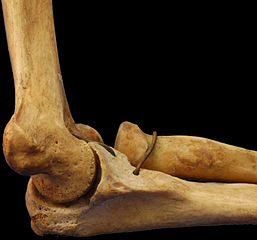
Golfer's elbow,often also called Medial Epicondylitis is defined as a pathologic condition that involves the pronator teres and flexor carpi radialis origins at the medial epicondyle. However, abnormal changes in the flexor carpi ulnaris and palmaris longus origins at the elbow may also be present. Golfer's elbow, is an inflammatory condition and is far less frequent than tennis elbow
The condition require detailed examination because of the proximity of other medial structures that may mimic Medial Epicondylitis. Exclusion of other etiologies of medial elbow pain is important for appropriate treatment.
Other names for Golfers elbow
- Flexor/Pronator tendinitis
- Curler's elbow
- Reverse tennis elbow
- Medial Epicondylitis
Incidence
Medial Epicondylitis is less common than tennis elbow, occurring at a ratio of 1:15.
Causes
Repetitive trauma resulting in microtears is a causative factor. Throwing athletes who have repetitive valgus stress on the elbow and repetitive flexor forearm musculature pull develop an overuse syndrome that affects the medial common flexor origin. Flexor-pronator tendinitis is a weight training ailment. In doing curls, the elbow flexors are the prime movers, but the wrist flexors must also resist the force of gravity throughout the lift. Occupation that require repetitive and strenuous forearm and wrist movement like carpentry. Tennis, racquetball, squash, and throwing often produce this condition. The serve and forearm strokes are the most likely to bring on pain.
Clinical Features
Golfer's elbow is characterized by-
Pain on the inner side of your elbow. Pain may extends along the inner side of your forearm. Stiffness Elbow may feel stiff, and it may hurt to make a fist. Weakness in hands and wrists. Numbness or tingling. Many people with Golfer's elbow experience numbness or a tingling sensation that radiates into one or more fingers — usually the ring and little fingers.
The pain of Golfer's elbow may appear suddenly or gradually. The pain may get worse when:
- Swing a golf club or racket
- Squeeze or pitch a ball
- Shake hands
- Turn a doorknob
- Pick up something with your palm down
- Flex your wrist toward your forearm
Physical Examination
- Point tenderness over or just distal to the medial humeral epicondyle. More localized tenderness compared to lateral epicondylitis.
- Pain with resisted wrist flexion.
- Medial soft tissue swelling.
- Tenderness over the muscles of volar forearm.
- Pain with passive stretching of wrist flexors.
Diagnosis
Golfer's elbow is usually diagnosed based on your medical history and a physical exam. An X-ray can help the doctor rule out other possible causes of elbow pain, such as a fracture or arthritis. Rarely, more comprehensive imaging studies — such as magnetic resonance imagining (MRI) — are done.
Differential Diagnosis
It is extremely important to differentiate Golfer's Elbow from UCL (ulnar collateral ligament) rupture and instability. In the later valgus stress test reveals UCL pain and opening (instability) of the elbow joint. Concomitant ulnar neuropathy at the elbow may be present with either of these conditons. Tinel sign is positive at the elbow (cubital tunnel) with chronic neuropathy. Other causes of medial elbow pain to be considered are osteochondritis dissecans of the elbow and osteoarthritis.
Special Tests
1) Medial Epicondylitis test-
While the examiner palpates the patient's medial epicondyle, resisted wrist flexion and pronation is done. A positive sign is indicated by pain over the medial epicondyle of humerus.
2) Tinel's sign at elbow-
The area of the ulnar nerve in the groove between the olecranon process and medial epicondyle is tapped. A positive sign is indicated by a tingling sensation in the ulnar distribution of the forearm and hand distal to the point of compression of the nerve.
Physiotherapy treatment of Medial Epicondylitis
Non-operative treatment of Golfer's elbow is similar to that of tennis elbow and begins with modifying and stopping activities that produce tension overload, the underlying etiology of Golfer's elbow, and correction of training errors (overuse) and throwing mechanics causing the tension overload.
Acute stage management
Goals
- Decrease inflammation/pain.
- Promote tissue healing.
- Retard muscle atrophy.
Cryotherapy- Icing and NSAIDs are used for control of edema and inflammation.
Whirlpool
Stretching to increase flexibility.
wrist extension-flexion
elbow extension-flexion
forearm supination-pronation.
Phonophoresis
Friction massage
Iontophoresis-With an anti-inflammatory.
Avoid painful activity-Such as gripping.
Sub-acute stage management
Goals-
Improve flexibility. Increase muscle strength and endurance. Increase functional activities and return to function. Emphasize concentric-eccentric strengthening.
Concentrate on involved muscle group-Wrist flexor-extensors, Forearm pronator-supinators, elbow flexor-extensors.
Initiate shoulder strengthening (Rotator cuff).
Continue flexibility exercises.
Use counterforce brace
Continue use of cryotherapy after exercise or function.
Initiate gradual return to stressful activities and previously painful movements.
Chronic stage management
Goals-
Improve muscular strength and endurance. Maintain/enhance flexibility. Gradual return to sport (high level activities).
Continue strengthening exercises (concentric-eccentric).
Continue to emphasize deficiencies in shoulder and elbow strength.
Continue flexibility exercises.
Gradually diminish use of counterforce brace.
Equipment modifications (grip size, string tension, playing surface).
For persistent symptoms
Cortisone injection ( 0.5 ml of betamethasone) into the area of maximal tenderness may be useful, but should be given no more than 3 injections per year and no more frequently than every 3 months.
Surgical intervention for golfers elbow may be indicated for symptoms that persist longer than 1 year.
REFERENCES
1. Woo SL-Y, Buckwalter JA, ed. Injury and repair of the musculoskeletal soft tissues. Park Ridge, IL: American Academy of Orthopaedic Surgeons, 1988.
2. Curwin S, Stanish W. Tendinitis: its etiology and treatment. Lexington, MA: Collamore Press, 1984.
3. Klaiman MD, Gerber LH. General considerations for managing tendon injuries. Bull Rheum Dis 1996;45(1)
4. Wiesner SL. Rehabilitation of elbow injuries in sports. Phys Med Rehabil Clin N Am 1994;5(1)
5. Leach RE, Miller JK. Lateral and medial epicondylitis of the elbow. Clin Sports Med 1987;6
6. Golfer's elbow [Wikipedia]
Return from Medial Epicondylitis to sports physical therapy
Return from Medial Epicondylitis to home page

 About Prodyut Das (PT, DPT) Physical Therapist at SMC, New York, USA. Former PT Winner Regional Health, South Dakota, Former HOD Physiotherapy & Fitness center @ NIMT Hospital, Greater Noida. Former PT ISIC Hospital. DPT ( Univ of Montana), MPT (neuro), MIAP, cert. manual therapist, Medical Neuroscience (USA). Licensed Physical Therapist in NY and Texas, USA. |
 Connect with me- |
 © Copyright physiotherapy-treatment.com since 2009 |