Enhance your health with free online physiotherapy exercise lessons and videos about various disease and health condition
Spondylolisthesis Treatment
Spondylolisthesis Treatment is given according to the grades of the slip. Grade 1 and 2 can be managed conservatively, while grade 3 and 4 require surgical intervention.
Spondylolisthesis Treatment is given with the aim to achieve maximum correction of the exaggerated lordosis and then maintain the correction.
What is Spondylolisthesis ?
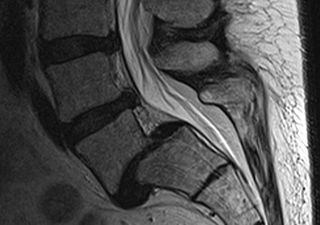
Spondylolisthesis is a condition in which the affected vertebra slips on the adjacent vertebra below it. It is very commonly seen at L5 and S1 vertebra level. It is more commonly seen in females than males. The most probable cause is due to congenital abnormality in the development of the neural arch. The pain usually starts after an injury and the symptoms are rare before adolescence.
Clinical features of Spondylolisthesis
- Patient complains of low backache, which is worst after some activity and is relieved by rest. The pain may radiate down to one or both legs.
- A depression is seen above the 5th lumbar vertebra.
- There may be some associated neurological symptoms in the lower limb.
- There is exaggeration of lumbar lordosis.
- The movements of spine are grossly not limited.
Classification of slip
Slip in Spondylolisthesis is measured by measuring the anterior slip of vertebral body. Meyerding classified the slip into 4 grades:-
- Grade 1- slip from 0-25% upto 1/4 length
- Grade 2- slip from 25-50% upto 1/2 length
- Grade 3- slip from 50-75% upto 3/4 length
- Grade 4- slip more than 75%
Fillard discovered a formula for calculation of the percentage of slip-
Percent slip= The displacement of L5 over S1/Width of S1
Spondylolisthesis Treatment
Treatment is given according to the grades of the slip. Grade 1 and 2 can be managed conservatively, while grade 3 and 4 require surgical intervention.
Treatment is given with the aim to achieve maximum correction of the exaggerated lordosis and then maintain the correction.
Conservative Management usually comprises of Physical Therapy
1. Some heat modality like SWD (Short wave diatheramy) is given for pain relief.
2.Spondylolisthesis Exercises to correct the deformity-
- Exercises to induce relaxation are given
- Strong abdominal exercises are given for abdominal muscles
- Flexion exercises for the spine, for example: sitting on a chair with back resting, then gradually bending the trunk forward from the lumbar region
- Active posterior tilting is tought to the patient to compensate the exaggerated lumbar lordosis.
3. The patient is given guidelines for correction of posture and its maintenance.
4. Stretching of hamstrings is done at regular intervals.
5. Patient is adviced to lie prone to control the advancement of lordosis.
6. A thoraco-lumbar-sacral orthoses is given to prevent the lordosis. The brace has to be worn continuously.
spondylolisthesis surgery is indicated when there are neurological symptoms, slip is progressing or if the pain is very intense.
Spinal fusion is done with or without the reduction of slip, postero-lateral fusion is very common. Spinal fusion prevents further progression of the slip. The spine may be internally stabilized with the help of rods and plates.
Get more information on Spondylolisthesis on Medline Plus
Physiotherapy Management after Surgery
During Immobilization
- Deep breathing exercises
- Early ankle, foot and arm movements are also encouraged
- Assisted movements to knee joints are given
- Isometric exercises of gluteal muscles
- Gradually hip flexion is encouraged, but it should not exceed 60 degrees.
During Mobilization
Gradual mobilization of spine is initiated. The patient is encouraged to perform functional activities and to perform all the activities of daily living.
Return from spondylolisthesis treatment to orthopedic physical therapy
Return form spondylolisthesis treatment to home page
Recent Articles
|
Author's Pick
Rating: 4.4 Votes: 252 |



 About Prodyut Das (PT, DPT) Physical Therapist at SMC, New York, USA. Former PT Winner Regional Health, South Dakota, Former HOD Physiotherapy & Fitness center @ NIMT Hospital, Greater Noida. Former PT ISIC Hospital. DPT ( Univ of Montana), MPT (neuro), MIAP, cert. manual therapist, Medical Neuroscience (USA). Licensed Physical Therapist in NY and Texas, USA. |
 Connect with me- |
 © Copyright physiotherapy-treatment.com since 2009 |